Sunday, February 5, 2012

Top 10 of '11 - #6: Mortal Kombat

Several weeks ago, I saw a post on Lamebook about a young woman who was utterly perplexed as to why a telephone from the 1990s was plugged into itself, unaware that the cord attached the unit to the receiver. Everybody has a laugh and thinks, “Oh boy, aren’t we old when kids these days don’t even recognize what a telephone from 20 years ago looked like!” It then dawned on me: kids these days might not know what the arcades were.

Notice the tense used right there: were. About five years ago I visited my favorite arcade, about 25 miles from my old stomping grounds. It was a plush basement within a mall, complete with an underground mini-golf course and rows upon rows of arcade machines during the fighting genre’s boom period. I can still remember how loud the Mortal Kombat II machines roared in my face, the screaming of combatants being torn limb from limb prior to a bass-driven declaration of victory from an unseen narrator. These are fond memories from a time that will never come back into the mainstream, as our machines at home are more powerful, more rewarding, and offer a wealth of competition from around the globe in the comfort of our living rooms. Kids these days will never really understand why we spent hundreds of dollars on a game we could never even take home with us against lackluster local competition comprised of burnouts (at least in the Midwest). There was something about putting your money where your mouth is, the camaraderie between frequent mallrats who played the same machines, and the social atmosphere. It’s sad to face, but facts are facts: we will never see that again. It is a relic in time that is to be lost on future generations.


Growing old sucks, and this dawning realization that arcades are next on the list of things kids simply won’t understand (and logically so – while I never regret the money poured into the arcades as an adolescent, it was never very practical) is just another extension of getting older. Partially because I hadn’t played a captivating fighting game in a while and partially out of nostalgia, I took a keen liking to the development cycle of Mortal Kombat, the ninth installment of the fighting game staple that brought the genre to the mainstream. Thankfully, it did not disappoint.

Blending the careful juggling made popular in the heyday of the Mortal Kombat franchise from Mortal Kombat II through Ultimate Mortal Kombat 3 with the dashing abilities that 3D fighters have implemented liberally, NetherRealm Studios has crafted Mortal Kombat from scratch with a brand new engine that successfully spiritually captures what made the original games so captivating: fast combat, loads of gore, and a flawless sense of humor.

One thing that Mortal Kombat infinitely improves on is satisfying combos. Long gone are the days of being able to dial-in your combos with an unblockable series of button combinations that automatically launch a string of attacks with the only way to break through them existing in the form of the player who's executing the attacks screwing their wide timing window up. With the new set-up, you can successfully dial-into a small combo of three hits worth 7% or so damage, but in order to deal the hefty fines, you will have to refine your ability to launch your opponent into the air and set them up with a perfectly-timed combination of attacks to keep them there. It’s not Street Fighter-difficult to master, but still tough enough to weed out the boys from the men.


Speaking as a relatively “good” gamer, I can state without a doubt that the fighting game genre is the most inclusive of all game types; it feeds on competition and the level of devotion it takes to become remotely good is often off-putting for many gamers. Unlike popular shooters where you can have fun with your friends while attempting to get better at the game, fighting games leave the spotlight shining solely on you; there is no one to attack while they are distracted with one of your buddies. Likewise, there is no way to play with your friends, only against them. This can cause tension in your inner-circle if you or your friend happens to be pretty decent at the game, making it a tough game to socialize in. Mortal Kombat tries its best to get over these humps by introducing a King of the Hill mode where the winner continues playing until he or she is defeated, all while spectators look at the action from the lobby and toss tomatoes at the screen, amidst other fun expressions.

The talk of the town with Mortal Kombat was inarguably the robust Story Mode that complemented the fun arcade-style action, putting you in the boots of random world warriors as they tackled their own paths through Earth Realm and beyond. Raiden sends a message to himself in the past in an effort to prevent Shao Kahn’s stranglehold over humanity, allowing the development team to properly write their love letter to previous Mortal Kombat installments with new takes on classic fatalities, characters, and especially stages – even if Kombat Tomb was overlooked. I’ll never stop wondering how that pterodactyl made his way to Outworld. The backgrounds are one of the better portions of the game, as 90% of them have been properly updated to feel as familiar as ever with a dabbling of artistic fortitude. The Krypt is also back to keep devoted fans chugging along in order to unlock all of the characters, fatalities, artwork and other goodies well after the Story Mode has played out. Simply put, there is a lot of value to be had here.

Ultimately, the reason I stopped playing Mortal Kombat was due to the lackluster online stability at the title’s launch. More so than any other genre, lag can utterly destroy an online community before it even begins in the fighting genre, as often the difference between victory and defeat can rest in milliseconds of timing. To face an insurmountable hill to ascend in the form of a half-second of lag is game-breaking, as it’s impossible to adequately time combos when the timing of the game you that enter is unpredictable, varying from lobby to lobby. Consistency is a necessity in these types of games, period. Still, my time with Mortal Kombat was fond enough to provide new memories with the franchise, a feeling that has not been heard of since 1995.

Strategy has never been a selling point to the orgy of violence that is Mortal Kombat, but that changes with the arrival of this ninth entry into the long-running fighting series. It's not all about blood and guts these days; if you dig down deep, you might find a little bit of brain matter and cartilage, too.

Saturday, February 4, 2012

Top 10 of '11 - #7: Rayman Origins

When a team gets together and focuses their mind on the type of game they would like to create, comparisons are immediately drawn up. More often than not, the run-of-the-mill games that sit wistfully on store shelves are the ones where the team decided on a generic approach, emulating whatever the hot title was three months prior to its initial development. “This will be like BioShock, but with an emphasis on gunplay!”

The truly great games get made under the distinction that the development team decides to go balls to the wall in creating something all to themselves. The reason we talk about games such as BioShock, Shadow of the Colossus, and Braid in such a positive light is the team’s brash, bold decision to create something that they would want to play, a title that further evolves a familiar mold that we all love. You can add Ubisoft Montpellier’s Rayman Origins to this list of love letters that developers write to themselves that we are lucky enough to get our grubby mitts on.

I’m a firm believer that if you truly love the work you’re doing, it will shine through in the final product. This is the case with Rayman Origins, a game that works on various levels of emulation but rarely imitation, offering instead to work its own complex platforming engine and ingenious level design into the friendly confines of a colorfully robust world of its own creation.


Evolving past the days of Goomba-stomping and spinning through loops collecting coins, Rayman Origins instead focuses on the art of platforming itself. Revamping what we consider to be the prototypical platformer, sensitivity and physics have been thrown against the wall in an effort to mix things up in the form of various playable character types. The differences tend to be slight between the plethora of characters and skins, but when your engine is as sleek as that of Rayman Origins, the difference between massive success and colossal failure often lies in the most miniscule of detail; you may have hit that ledge instead of plummeting to their doom if your character provided the teensiest bit of gliding boost, for example.

Again, however, all of this is miniscule in the long run. The slightest improvement to a storied formula might not gel as well with others as it does with this open-minded platforming aficionado, and I understand that. What we can all agree on – especially Ubisoft Montpellier – is that the best way to improve the platforming genre is with sophisticated stage design. Rayman Origins delivers more than enough of that, as you will receive several handfuls of brilliantly developed and gorgeously animated stages after the initial introductory world, which is admittedly bland at first glance. This bleeds over to the smile-inducing boss battles, as well, where a myriad of oversized goons are yours for the smacking.


There are three types of stages in Rayman Origins, and all three types knock it out of the park. Your typical platforming stages have been beefed up with floating wind currents that send you spiraling between thorny vines, dodging debris while bouncing to and fro between shards of wood, and swimming through jellyfish labyrinths without getting zapped. Riding on the back of a friendly mosquito, you can take part in cleverly woven side-scrolling shooter tracks that would make the casual R-Type observer salivate, ricocheting bullets off of metal objects to land trick shots on pesky inaccessible foes. The best has been saved for last in the form of chase stages, where moving forward is a requirement in an effort to seize runaway treasure chests containing the teeth of the Grim Reaper, who has a heinous trick up his sleeve upon completion of his dental work. If you don’t grin and grimace as you figure out a tough portion of the chase scene only to meet the next roadblock, you might need to check your pulse. Simply put, Nintendo could use some pointers by playing through this inspired take on the genre they put on the map.

The title of best 2D platformer for this generation (and possibly ever, truth be told) still belongs to the epiphany-inducing Super Meat Boy, but Rayman Origins certainly won’t mind coming out of nowhere to blindside gamers everywhere for the second place spot. This game has regularly been available for bargain prices worldwide as of the past few weeks, which is unfortunately mind-boggling. Don’t miss out on one of the better throwbacks of this generation.

Friday, February 3, 2012

Top 10 of '11 - #8: Gears of War 3

I always find myself more critical of the Gears of War franchise compared to other similar titles, like a critical parent who wishes one child were more like the other. It likely has to do with the myriad of issues that go unfixed in the multiplayer, such as consistency levels, rotating weapon layouts that disrupt strategy, and unbalanced starting weapons that turn the normally slow-paced Gears of War into a violence-on-demand frag-fest.

Gears of War 3 continues to co-opt features from the likes of Call of Duty with the ability to prestige, a Team Deathmatch mode to attract the run-and-gunners who infest Halo, and a strong emphasis on free-for-all-type battles as opposed to teamwork – in other words, it has become something other than Gears of War in its third installment, largely in part to these contributing factors piling atop the charade that is the Gnasher and Sawed-off Shotguns. 80% of the deaths in my experience – both killing and being killed by – have been at the hands of starting weapons. Gears continues to struggle with the awkwardness that Gears of War 2 brought about, giving possibly the best and most unique multiplayer engine some negative traits the likes of the aforementioned setbacks. If only it could remain as consistent as the Campaign that complements it.


Due to the default mode being Team Deathmatch, old Gears staples such as Execution and Warzone have seemingly gone by the wayside. Tens of thousands will be playing Team Deathmatch, while only the 2000 or so cream-of-the-crop-tier players will be demolishing the competition in the traditional Gears of War game modes. In other words, if you wish to enjoy classic Gears, you better shape up, buttercup, because you will be going toe-to-toe with the very best Gears of War players in the entire world. Needless to say, this is off-putting for those of us who are pretty good as opposed to dedicating their free time to mastering the craft of the engine.

Team Deathmatch also renders certain maps useless due to persistent spawn-killing that overtakes good sportsmanship in the heat of the moment. Levels such as Drydock and Overpass quickly become a race to whoever can control the center of the map and shoot down at those who are just spawning. Fear not, as you’ll get 3 seconds of spawn protecti… never mind. The time it took me to type that sentence is all you will get before the hunting spree commences in the wide-open spaces where cover is non-existent and resistance to four guns-blazing is futile.

So why is Gears of War 3 on this list, given the complaints? It is because at its core, the gameplay engine is unlike anything else on the market, and the Campaign is no slouch, either. Gears of War 3 is more of the same from Gears of War 2, offering gigantic boss battles, better vehicular missions, a little variety in backgrounds to spice things up, and a fitting conclusion for a breakneck story arc. With its back-story being properly fleshed out, the tale of Marcus and Dom comes to an end while reflecting on the casualties along the way, be it the cities that have crumbled in ruin, thanks to the C.O.G. and their Hammer of Dawn’s destructive force. Hearing the horror stories of how the C.O.G. destroyed civilization even more than the Locusts themselves is a political statement wrapped in a beam of chaos brought down from above -- especially given the conclusion to the second game, where the largest city in the land was destroyed at the hands of the good guys themselves.

Imitation is the sincerest form of flattery, as they say, and Gears of War 3 imitates several franchises quite a bit throughout the course of its Campaign mode. Several games have gameplay elements or settings lifted straight out from underneath them. Some are more ambiguous, like hordes of rabid creatures swarming you viciously (Left 4 Dead), while others are as blatant as announcing that you’re shoplifting over the public address system at a retail outlet, such as an underwater city where the worlds best and brightest are kept away from the unclean (BioShock). Countless games have taken from Gears in the past (and in the future; Resident Evil 6 looks to adapt the Gears cover system), so it's not a knock on Epic for lifting a few ideas here and there. Still, looking at the Depths multiplayer map is essentially like staring at a wartime Rapture environment. It is what it is.


The thing that sticks out most in Gears of War 3 is the emphasis on creating a more heartfelt story than merely “bug-men have surfaced on the planet, make tiny pieces of metal enter their mouth-holes.” It is clear from the get-go that humanity is on its last legs, and the final confrontation – for better or worse – is dawning for the human civilization. Marcus and the rest of the C.O.G. members we know and love will face greater hardships than we’ve seen before, and they’re handled in the best way possible. It seems slightly bi-polar in a world where riding Brumaks to destroy other Brumaks and revving a chainsaw to cut through the innards of a giant worm held sway in the second entry, taking the series from serious to tongue-in-cheek to sorrowful. It’s an identity crisis, but it manages to salvage the sense of despair that made the first game the golden standard for the series.

Gears of War 3 suffers from the same pitfalls that the second installment of the gore-hungry franchise fell into. During the original Gears of War, gamers witnessed a gigantic beast stomping through in the distance and immediately wanted a chance to go toe-to-toe with it. This enemy was known as the Brumak, and it was larger than every other enemy in the original game. One of the biggest reasons why the first Gears of War remains the best was its terrific pacing, and Cliffy B responded to player outcry over wanting to face the deadly beast by throwing dozens of them at us – and even larger critters, to boot. Gears of War 3 continues this trend by tossing even bigger baddies out there for us to obliterate in a mere two rounds of Lancer fire. I prefer a little foreplay as a prerequisite to my orgy of violence, personally.

Gears of War has defined itself -- again, for better or worse -- with these big moments. The initial sequence at the start of the game has a humongous sea beast attempting to sink a large vessel that Marcus and Co. are aboard. This sums up the experience you are likely to face throughout. I would argue the opposite, that Gears of War is at its best when it forces you to look at the devastation around you. One particular sequence finds the C.O.G. entering a city that has long been forgotten under the ray of their very own Hammer of Dawn. As you look around, you notice that the remains of men, women, and children who perished in the blast have become entrenched in time, erected as dust statues all around you by the dozens, collapsing into the ether upon touch. These are the moments, due to their perfect pacing that made the first installment so memorable, that make the case for Gears of War as an elite franchise. If it could stop pandering to the Michael Bay fan club of big explosions and instant gratification, it could finally reach its full potential. Alas, that must happen after the Marcus Fenix chapter in the Gears universe. Gears of War 3 is a step in the right direction for the franchise. As cliché as it has become in sequence, it is still an engine worthy of imitation, praise, and repeated playthroughs. Now if only they could finally fix issues with the multiplayer...

Thursday, February 2, 2012

Top 10 of '11 - #9: Catherine

I love never knowing what to expect out of a title. I intentionally avoid trailers for upcoming films I might be interested in just so I can know as little about them as possible; there are simply too many telling signs in previews for my liking that can untie a story's knot. When I first heard the concept of Catherine, a very Japanese import that hit American store shelves from Atlus, I immediately ceased reading much about the story so that I may savor it for myself. I’m glad I did.

At some point in a long-term relationship, you begin to seriously contemplate all of the words you threw around at the inception of the budding romance. Do you really, actually want to get married? At what point does “I want children someday” become “I want children this year”? Somewhere along the line comes time for an evaluation of all the fly-by-night statements you’ve made about who you want to become one day. Some openly accept it as a passage of growing up, while growing up terrifies some of us. Awkward tension arises from our own uncertainty, which we project on our closest confidant, and sometimes we need an outlet outside of them. In a moment of weakness, just as Catherine’s protagonist, Vincent, soon learns, we cheat to escape the growing realization that maybe what we have been living is a lie.


In a nutshell, the above paragraph is the premise for Catherine. Vincent is a nice enough guy who is too centered on his own needs to adequately provide for his long-term partner, Katherine. Katherine is ready to settle down and get married, as to where Vincent feels that to be married is to accept death. Enter Catherine, an early-twentysomething with a penchant for a man in a bind. When Vincent awakens the day after meeting her only to find Catherine sleeping beside him and no recollection of what happened, the game’s story effectively begins.

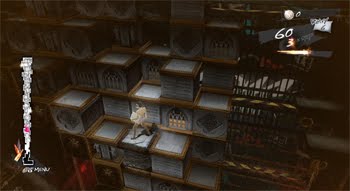
Speaking of sleep, it soon becomes the enemy of Vincent, as the other 60% of the game – the actual gameplay rather than interactive cut-scenes and socializing – takes hold of Vincent every night. While the social experiments are a lot of fun, the main portion of Catherine will revolve around these puzzles, where you must manipulate a tower comprised of blocks in order to ascend to the top where an escape is imminent. Varying creatures await at the bottom of the pit should you fall, ranging from rancid babies to decaying demons in wedding dresses – some of which are actually rather frightening to behold. This is not the bread and butter to Catherine, but it's a fun puzzle set-up with a variety of block types to spice things up right as they begin to lose your interest.

The great thing about Catherine (the game – not the seductive character) is its ability to develop according to the player’s response to the actions. Being a red-blooded male, it’s tough to tell Catherine not to send scantily-clad photographs to Vincent’s smartphone, but it’s the right thing to do if you feel Vincent should man up and confront Katherine about his issues. The game allows you to dictate how their relationship will pan out. If you feel as though Katherine is suffocating poor Vincent with her demands, you can snark back at her and run into the arms of the bodacious babe, Catherine. If you feel as though Vincent is an immature brat, make him feel like crap and treat Katherine as nice as the game will allow.

On the puzzle side of things, the folks you meet and interact with around the bar where Vincent continually hangs out will appear periodically during his night terrors, and if they succumb to the tower, they never wake up. Catherine plays out like a quirky horror movie, if you’ve ever heard of such a thing. As puzzles intensify, you are taught new tricks to continually advance through the game and your grasp of exactly how to ascend the tower will mature to the point of near-perfection. You will be dreaming of sheep ascending blocks above derriere demons in no time.


The Japanese are known for their story-heavy titles in the gaming industry, from the Metal Gear Solids of the world to Final Fantasy, but rarely has a game been such a sprawling narrative as Catherine. Upon booting the game up, you’re slowly and carefully taken down a dreadful road littered with mistakes and pop quizzes on morality along the way, and it always seems that all eyes are upon you. The game that’s being played in Catherine is you, not the other way around, as it will openly judge your decisions and provide you with a look at what Vincent’s life will be like due to the choices you’ve made.

Catherine is certainly unique: It offers puzzle-lovers to have their fill while those in it for the story (such as myself) can expand their minds to encompass the art of slinging blocks to and fro. And lest we forget the best part in deciding the fate of our protagonist! Variety is the spice of life, as they say. Give it a try, if only to look inside yourself for once.

Tuesday, January 31, 2012

Top 10 of '11 - #10: Bastion

Coming up with an original concept is hard to do. I’ve struggled with this over the past several months while outlining my book, and unfortunately determined that you cannot succeed with one concept alone; it will only get you so far before you realize that there must be substance behind an intriguing idea to tie it all up.

Supergiant Games’ Greg Kasavin, the former “one of us” who was the site director at GameSpot, knows that full well. The idea of having a constant narrator going over the events that unfold before your very eyes in Bastion, Supergiant’s first attempt at creating a videogame, could only get you so far to garner interest for your product. Instead of using the idea as a bullet point, Kasavin has masterfully written Bastion so that it is the mere bait on the hook; the line that reels the player in is crafted by the universe of Bastion, the frailty of its lore, and the lone, living spectators who escape unscathed into the Bastion itself.

But let’s face it: we all nibbled the bait of having the raspy-voiced prophet narrate our every move. Be it to advance the story or to hear him mutter on about our desire for destruction whenever we’d smash up a deserted marketplace that the Calamity, a metaphorical spreading nuclear bomb, had yet to devour. If the goal was to get us to try Bastion as a result of that, it worked -- but without the colorful art design, tight gameplay, diverse weapon choices, and the best soundtrack of the year, we certainly wouldn’t have stayed in the comforts of the Bastion for very long.


Bastion offers a unique top-down style that only comes along once every few years, a throwback to the 16-bit games that we know and love. Combining the style of a crooked Zelda with the run-and-gun frantic pace of Gunstar Heroes, Bastion requires a lot of focus to dig down deep and demolish the devious trials that dwell in the Bastion’s domain. If you’re still in the mood for pain, you can make things slightly more torturous by angering the Gods. By denouncing specific Gods in the game at the flip of a switch, you can increase the damage enemies take, dish out, and a plethora of other sinister options.

The highlight of Bastion is, without a doubt and damn near inarguably, the soundtrack. Darren Korb is the man responsible for giving Bastion’s soundtrack as much flair and personality as the art style and narrator himself, infusing a mix of hard-edged country twang with a string here or there. The most memorable portions of the game revolve around songs sung by Korb and Ashley Barrett, which give the characters of Zulf and Zia, respectively, a life of their own.


It makes me sad to see my colleagues from various sites who are just now getting around to Bastion, which came out during the dead period on the release calendar (July 2011), well after they have snuck their choices for Game of the Year in the voting boxes. Certainly it wouldn’t make it to the gold at the bottom of the dog pile, but it would have gotten even more players talking about it than there currently are.

Essentially, Bastion is the complete package and as a result, one of the better games available between the Xbox Live Arcade and PlayStation Network platforms combined, yet only currently available on the former. When you think of polished experiences, chances are that it will be high on the list of downloadable titles for a variety of different types of gamers. Those of you in search of customization, visual splendor, a fully-loaded story and anti-nuclear political statements, look no further than Bastion, arguably the most consistent game in quality for the money this year.

From Great Heights to Staggering Falls: 2012 Begins

2011 was a good year.

As many of you know, Which Button Jumps...? is an ever-evolving beast that I've attempted to harness for the power of good over the years; it is an occasionally-updated collection of brief essays on gaming, which I use to find new employers or clients. Since my last update, I found steady work that paid well throughout the entire year of 2011, for which I am grateful. Unfortunately for me, that came to an end to start off 2012, as I was laid off due to budget cuts from my primary job and restructured at my secondary gig on the same day. All things have a positive side to them and I feel this is no different, allowing me to dig my heels into the gaming scene once again after a financially stable hiatus from this line of work.

Many people go through life without a clue as to what drives them professionally, scrambling to find their place in the world. I have been lucky enough to know since the age of 10 that I wanted to change the landscape of the gaming industry through written word. I taught myself how to read and write thanks to video games, and as a way to repay the industry that gave me such a wonderful gift, I was determined to become a writer within it with a desire to help the people who create video games make them better. For the most part, I have not succeeded in doing so thus far due to lack of opportunity and time. I hope to change that -- perhaps with your help -- in 2012.

If you are looking for freelance help, please contact me at davidjmccutcheon@gmail.com. I have experience in site administration, articles in both publication and on the Internet, all-nighters at conferences, covering lavish launch parties (photography included), and wrangling celebrities for what have been mostly positive interview experiences. I sincerely want to help you make a difference.

Over the next two weeks, I will share my Top 10 list for video games in 2011. It feels wonderful to write about games once again. I hope you have as much fun reading the write-ups as I had creating them.

Thanks for reading and stay tuned,
David

Monday, September 6, 2010

Quantity Over Quality: The Plight of DLC

Before five days ago, I had been planning this entry for months and months with a very distinct tone swirling around in my noggin: I was going to attack game developers and publishers for trying to nickel and dime consumers as a ploy to try and recoup some of their losses pertaining to their increased, unpaid hours as a result of the corporate greed above them. Still following? Good. That was five days ago, and like any open-minded person, one fell swoop can completely alter a state of mind. Yeah, I’m referring to Dead Rising 2: Case Zero, the new Downloadable “episode” from Capcom.

Dead Rising 2: Case Zero works as a prequel to the upcoming sequel, released one month between one another, introducing the main character and his once-bitten little daughter as they trek across the Nevada desert in search for a lasting cure to her infection.

The “demo” teaches you the basics regarding the changes in the game’s computer AI when hauling survivors from one location to the next, the emphasis on searching for a temporary solution for zombification in Zombrex--a hot commodity that will keep the protagonist’s daughter from turning into the walking dead--and an introduction to a handful of weapon combinations to showcase one of the retail title’s selling points. (A kayak paddle with two chainsaws strapped on both ends? Uh, hell yes?)

On top of all of this, your stats and bonuses carry over into the full game. What is not advertised, however, is how cleverly this so-called demo sets you up—and more importantly, pumps you up—to play the full-fledged retail game. I’m practically bouncing on my hands in anticipation to get my hands on the full game; if this game truly is a demo instead of a separate experience, it works better than any demo before it.

Let’s argue why Case Zero is not a demo. Well, that’s the easiest argument in this entire entry: it’s not a demo because it is a separate piece of gaming from Dead Rising 2. It’s a full area that you cannot access in that game, full of characters that you will (likely) not see in that game. Where Dead Rising 2 takes place in Las Vegas, Case Zero takes place in the tiny Route 66-esque town of Still Creek. There are twelve unique achievements tied to this so-called demo, complete with its own boss encounter. This, readers, is Downloadable Content, a game add-on like you would normally purchase after the fact.

Now, you can make an argument regarding whether or not this can be considered nickel and diming considering the game that the DLC has reached the open market prior to the retail game’s launch. “If it’s done a full month before the game comes out, why isn’t it on the disc?” some may wonder. This is, of course, in the eye of the beholder.

For instance, I have grown stale of demos. I usually find myself wasting time playing a semi-polished portion of a game that I will have to stroll through again once the game arrives on store shelves, like some strange déjà vu experience. Due to this, demos seem like a waste of my precious time, like I’m watching the first 15 minutes of a movie three weeks before it hits theaters. I would rather experience the complete film at once rather than broken into pieces.

Keiji Inafune feels the same, telling IGN in a recent interview he “didn't want to go down the boring route of cutting out a part of the game and letting players play for free, and then, if they like it and buy the game, they have to play through that bit again as well. I think that business model is really boring.” I feel the same way, so kudos to Inafune-san for understanding the plight of the current market.

In the case of Case Zero, it showcases everything that it needs to, sans gorgeous visuals, without repeating itself on launch day. Furthermore, I don’t feel like I’m wasting time since I’m working towards gaining levels and collectible Combo and Scratch Cards for unique weapon combinations. Case Zero successfully sold me on Dead Rising 2, cranking my excitement from a 7 to a 9, in a matter of hours.

Where Mass Effect 2's DLC mostly felt like leftovers, Case Zero is a tasty appetizer entirely unique to the main course, whetting the appetite for the delicious brains to be unveiled later in the month. You could say that aforementioned one fell swoop was me falling in love with the concept of DLC once more.

Pessimists, however, would say that fall was one from grace, and I’m falling right into the pocket of Capcom in their “latest catastrophe” of “charging for demos.” If they’re adamant about it, they likely will see the game through rage-soaked glasses, purposefully ignoring the good qualities something like this can provide just to remain solidified on their side of the debate.

Case Zero is an interesting experiment in its own right, and a unique case, indeed. I’m a little afraid that developers will make a great discovery for the DLC concept only to have it misconstrued and transformed into something sinister by their publishers; there’s no doubt that this is not the next evolution of gaming, as demos have been around for the longest time now, but it could be that next big thing that gets warped into something demented by those bigwigs gripping at thin air for dollars.

But within this mini-review, I’m here to explain why my stance on Downloadable Content has shifted slightly, providing a neutral stance while tight-roping the fine line between corporate greed and consumerist exceptionalism.

My time with Downloadable Content has been a bit of a rollercoaster. The beginnings of the movement had the potential to bring full new worlds to life; a developer could launch a long-anticipated game and work on additional content for, seemingly, years to come. This could provide a long-lasting relationship between the consumer and the developer, especially for cases such as Halo, Call of Duty and Gears of War—in other words, games that deserve the continued support of their creators, as the fans will keep playing those games continually enough to make them mainstays in Xbox Live’s Top 10 for online activity.

Much like politics, when the potential seems genuine and promising, the reality soon settles in underneath the good intentions and well-meanings, those sweet fruits of labor seem to all turn into bitter lemons.

One of the first pieces of DLC to hit the Marketplace was Horse Armor to protect your steed in Oblivion, a not-so-carefully disguised ploy to make gamers a little bit better at the game, folks who wanted instant gratification without all of the grinding. It was the first of a series of appalling acts within the industry to change the potential of DLC from the promise of prolonging a favorite game to a valve that pumps blood into the heart of corporate swindle.

Soon after, we saw thousands of Microsoft Points worth the costumes in the wrestling game Rumble Roses XX. No longer could you merely unlock an alternate costume by playing a game inside-out, you had to outright purchase it. In order to purchase all of these costumes, you would have to spend 6960 Microsoft Points—nearly $90 in digital currency.

Namco intentionally “locked out” a handful of stages in their Xbox 360 iteration of the Katamari series, Beautiful Katamari. After purchasing around $20 in stages, an instant-click download would occur, meaning the stages were already on the disc and intentionally withheld from the consumer. These are two of the best examples of the “nickel and diming” that many on the anti-DLC side can point to.

On the side of unlockables, I believe there can be a fair balance with two tiers of unlockables: one half that requires the utmost skill, and the other half, which can be unlocked via determination or the optional digital currency payoff. Frankly, if I see a player decked out in tough unlockable garb, I know that guy has earned it; at the same time, the lower-tier unlockables can be picked by folks like me with lesser talent at games or outright bought by the saps who are even worse than I--if they even exist in the first place.

This would be a good balance and keep everyone (mostly) satisfied. The same concept could be blended into the mix for stage unlocks and the like. Thankfully, the experiences with publisher have been few and far between ever since early 2008 with this sort of stuff, but new issues have risen.

In Madden 2010, you cannot create a stellar player without paying real money to unlock the ability to concoct a Pro Bowl-type football star. On the opposite end, Sony’s MLB the Show ’10 has read my mind and offered players the ability to plow through way through the minor leagues or outright purchase attribute points, giving two paths to a single destination. EA, take note: this is the proper way to nickel and dime. I can eventually have an All-Star third baseman in MLB the Show ’10 without ever dropping a cent into the game, so my back is not against the wall with aggressive--and frankly, revolting--money-grubbing schemes.

But is this a new concept? For years, players have bought and sold high-level accounts in online games such as Diablo II and World of Warcraft, complete with the best armor and weaponry that the game has crafted, on online auction sites such as eBay. Is this not the same concept that games such as MLB the Show ’10 are now providing, a shortcut to being a great player for a price? The only difference is the people who have their hands in the creation of the game are the ones receiving the money instead of the twentysomething kid with no other means of income.

No, this is not the DLC that has plagued my level of interest in the industry’s buckling trend, as it seems like no game can be socially accepted these days without the promise of support after release; it’s almost becoming a taboo in the industry to not support add-on expansions for every game your development team dips their hands into.

This is not a new concept in the gaming industry, as popular IPs such as The Sims, Elder Scrolls, and Diablo are a short list of large titles to support expansion packs in the past. But this begs the question, is every game worthy of downloadable episodes or add-ons? The sad fact is that I spent just as much money on DLC in the past nine months as I have retail games, with the entire Fallout DLC package running at the suggested retail price of a brand new game altogether upon its release.

All of this said, there are definitely positive applicable uses of DLC in the spectrum; a game like Little Big Planet benefits from having additional building packages themed from other IPs, such as their Metal Gear Solid package containing stickers and themed-building blocks. Why is this such a good use of DLC? Because only a small percentage of Little Big Planet players actually build enough stages to warrant the optional purchase of more tools to use when crafting their imagination’s playhouse.

With the upcoming and previously talked about Mortal Kombat due in 2011, the developers will have the option of crafting all-new characters to drop into the mold of the game long after they’ve finished the product, catering to the hardcore fans of the series without sacrificing roster space for the casuals who purchase the game. So long as those new fighters can be used against players who have not purchased them, this is a viable exploration of downloadable endeavors. Another interesting twist could be if the ESRB clips some of the more brutal Fatalities from the game, they could eventually pop up in DLC down the line.

Most developers are big supporters of providing DLC to their titles. Noteworthy standouts for games due over the course of the next 16 months include NetherRealm Studios, the team putting together the latest iteration of Mortal Kombat, and Dave Jaffe, the creator of Twisted Metal and God of War, who plans to aggressively support DLC upon the release of the next Twisted Metal entry.

Jaffe, in particular, spears through the heart of the opposition of downloadable goods. He has stated many times on his Twitter account (DavidScottJaffe) that he believes the consumer should not feel nickel and dimed so long as they feel they’ve gotten their money’s worth out of their $59.99 retail purchase. Of course, Jaffe also believes most Pixar movies are ho-hum visual spectacles, so we can take his opinions with a grain of salt (I kid, of course).

The man brings up a good point, albeit one that is incredibly tough to judge; just where is this tiniest of thin lines where it becomes a half-baked attempt by a developer and/or publisher to get a few extra bucks, and where does it tread over into a bunch of complaining, greedy gamers endlessly chanting for more, more, more?

I feel this isn’t the main problem in the first place, though I will more often than not side with the developer in these cases; DLC is optional, and at the heart of my argument, just not as good as the games it is supposed to complement. To delve into my general problem with DLC is to look at games such as Borderlands and Mass Effect 2, two very good, albeit different, games that offer a long-lasting, 20+ hour adventure where you feel as if you’ve, as Jaffe put it, gotten your money’s worth.

Being a big fan of Mass Effect 2, I blindly downloaded the first two DLC add-ons released for each one. To quote one of the developers of the new Mortal Kombat, from his Blogspot account, “[DLC] lets those of us who really enjoyed a game get even MORE of the game without having to wait years for a sequel.” I initially agreed with this statement. Seeing as how I have agreed with both cited developers in the past two paragraphs, how could I disagree at this point?

What I soon learned after downloading and playing the first two Mass Effect 2 add-on packs was that there’s a reason I think of that game as the frontrunner for Game of the Year: it was meticulously worked on day in and day out for several years. The amount of polish in the storytelling, presentation, and the subtle nuances such as random dialogue between your party members of choice makes the game feel above the competition in even the best years of gaming. All of this, however, is lacking in the DLC.

Upon coaxing gamers into buying the title brand new instead of used, EA promised consumers free downloadable content on a continued basis for Mass Effect 2. Since then, we’ve seen around three times the amount of pay content by comparison of the free stuff—a new character completely lacking the communication function and a sad excuse for a Mako replacement.

Even the good Mass Effect 2 download content has its glaring faults; the minimal dialogue issued by Commander Shepard and zero dialogue uttered by your mimes... pardon me, support characters, is about the most obvious omission in a game as character development-heavy as Mass Effect.

Certainly, I adore Mass Effect 2. I’ve played games professionally long enough to understand that when a game like it comes along, it’s solidified top shelf honors at the Game of the Year roundtables in the industry. So why tarnish something so noteworthy by releasing something so insignificant to prolong it? Has DLC really become the re-releases of the Star Wars Trilogy? Adding additional scenes for the sake of adding them, with minimal quality control to grasp the situation?

My biggest problem with DLC is the fact that, more often than not, it fails to live up to what is on the disc, likely due to the rat race of getting additional content out there for the sake of saying you support the DLC platform itself instead of the game you’re supposed to represent. If there’s one thing I cannot stand, it’s inconsistency—especially when it’s such a stark contrast from the Mass Effect 2 disc content to the downloadable content.

Of course, it looks like what I have to say in this matter is but a whisper in a crowded convention center full of gaming executives, producers, developers, and above all, consumers who disagree with my assessment. Huh, so that’s what it feels like to be deemed insignificant. Maybe—just maybe--this 2800 word blog entry will melt the icy heart of an economic growth-devouring executive... or be used as their toilet tissue.

-Zoop